
Is Buying a Model Home a Good Idea? Omaha Real Estate Guide
Model homes in Omaha look like instant wins—upgraded finishes, immediate occupancy, and builder incentives that seem too good to ignore. But the financial mechanics behind these properties often work against move-up buyers in ways that aren't obvious until after closing. This guide breaks down when buying a model home makes sense, when it doesn't, and how to protect yourself if you decide to move forward.
Table of Contents
- Why Model Homes Seem Attractive
- Hidden Costs and Financial Traps
- The Property Tax Shock Most Buyers Miss
- Physical and Structural Risks
- What Nebraska Builder Warranties Actually Cover
- When Buying a Model Home Makes Sense
- When to Walk Away
- Model Home vs. Spec Home: Direct Comparison
- Questions to Ask Before Closing
- The Bottom Line for Omaha Buyers
Why Model Homes Seem Attractive
Model homes offer immediate occupancy with professionally designed interiors that eliminate construction delays and the guesswork of imagining a finished product. Builders invest heavily in upgrades—premium appliances, designer flooring, upgraded fixtures—specifically to showcase their best work to prospective buyers touring the community.
The appeal is straightforward. You walk through a home that looks move-in ready, and the builder offers incentives that currently average 8.7% of the purchase price industry-wide (up from 6.3% year-over-year). In Omaha's market—which ranked as the hottest housing market nationally with 38.4% of homes selling above asking—a turnkey option with financing perks feels like a smart shortcut.
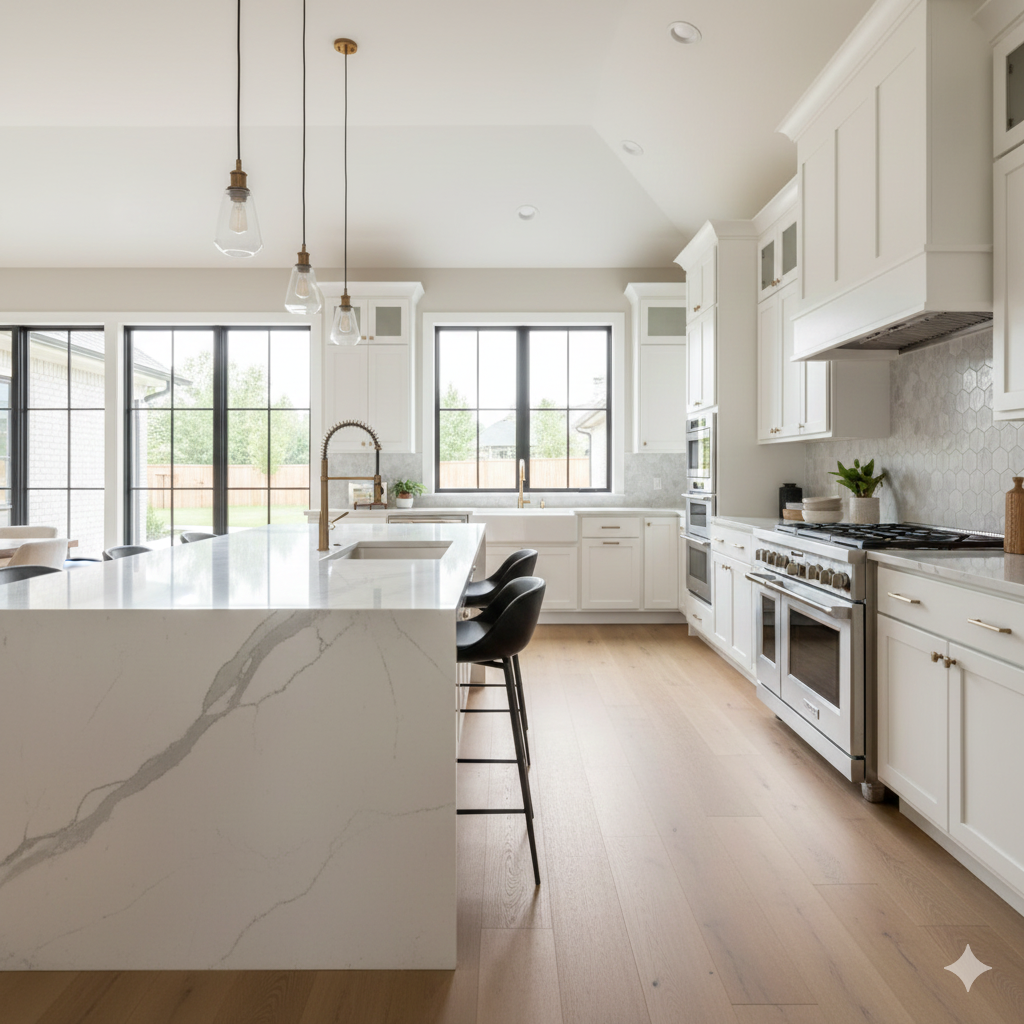
The problem is that these surface benefits often mask a cost structure designed to protect the builder's margins, not your equity. The incentives that seem substantial—mortgage rate buydowns, closing cost assistance, designer upgrades—frequently keep advertised prices artificially high while shifting risk onto the buyer.
Hidden Costs and Financial Traps
Builder incentives are not price cuts. When a builder advertises rates of 3.99% to 4.5% while market rates sit at 6.75%, they're paying points to buy down your interest rate rather than reducing the home's actual price. This costs builders less than a direct price reduction, so they maintain inflated sale prices while appearing generous with financing.
The long-term impact hits your equity. You pay a higher purchase price that becomes your mortgage balance. If you need to sell within a few years, or if rates normalize and you want to refinance, that balance may exceed what comparable homes are actually worth. Appraisers often fail to account for financing concessions, which means builder pricing stays artificially supported by previous buyers who also overpaid.
The Appraisal Gap Risk
New construction contracts typically lack appraisal contingencies, which shifts all appraisal risk to you. If the home appraises below your contract price, you cover the difference in cash. Here's how this plays out: you agree to pay $450,000 for a model home, but it appraises at $425,000. Your lender will only finance based on the appraised value—typically 95% of $425,000, or $403,750. Instead of your planned down payment, you now need to bring $46,250 to closing.
Appraisal gaps of $20,000 to $50,000 are increasingly common when builder incentives inflate contract prices beyond what comparable sales support. In Omaha's market, where median prices range from $280,000 to $304,000, realistic gaps of $15,000 to $25,000 can derail a closing if you haven't planned for them.
The Property Tax Shock Most Buyers Miss
Property tax surprises are the most predictable—and most overlooked—risk in new construction. Your initial escrow payment is calculated on unimproved land value, which might be around $50,000. At that assessment, your monthly property tax portion might be roughly $100. But once your home is completed and the county reassesses the improved property at $300,000 to $400,000, your tax obligation jumps to approximately $800 per month.
Your escrow account is now $700 per month short. The lender's solution is to increase your mortgage payment by that amount for the remainder of your loan. This isn't a one-time adjustment—it's a permanent increase that many buyers don't anticipate when qualifying for their mortgage.
Nebraska assesses properties at 100% of actual value with no discount for new construction. If you're in a Sanitary and Improvement District (SID), additional levies of up to $0.40 per $100 of valuation compound the impact. The homestead exemption, available to qualifying elderly, disabled, or veteran homeowners, is forfeited if the home's value increase resulted from improvements—which applies to every new construction property.
How to Prevent Property Tax Shock
Proper escrow setup can minimize this shock to a 5-10% increase rather than a 700% surprise, but it requires explicit coordination with your lender. Before closing, confirm that your escrow is being calculated on the improved property value estimate, not the land-only assessment. Budget 2-3 times the initial estimate for your actual property tax obligation once reassessment occurs.
Physical and Structural Risks
Model homes absorb hundreds of buyer tours over months of operation. That foot traffic creates wear on flooring, doors, caulking, and trim that goes beyond normal use. Professional inspections of model homes routinely document 50 to 100 or more defects—paint issues, drywall damage, hardware problems, window seal failures, caulking gaps—most of which are sold as-is.
Builders sometimes extract spare parts from model homes to repair other properties in the development. Drain covers, door handles, and hardware may be missing or mismatched. If a builder won't address cosmetic issues before closing, it often signals a broader pattern of cutting corners that could extend to structural elements.
Foundation and Structural Concerns
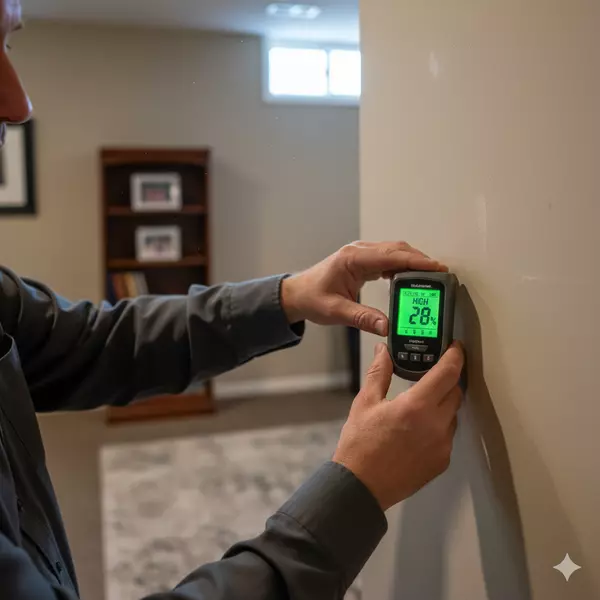
Heavy occupation during the sales period can cause foundation settling that doesn't manifest until after you've closed. Uneven floors may develop gradually. Cracked drywall and paint defects can signal underlying framing issues or moisture intrusion. The distinction between cosmetic wear (surface paint) and structural damage (water infiltration) matters because cosmetic issues can mask structural problems that won't reveal themselves for months.
Model homes aren't inspected to the same standard as resale properties. Many buyers discover significant issues only after closing, when their leverage to negotiate repairs has disappeared.
What Nebraska Builder Warranties Actually Cover
Nebraska builders provide tiered warranty coverage: one year for workmanship and materials, two years for plumbing, electrical, and HVAC systems, and ten years for structural defects affecting foundation, framing, and load-bearing walls. This sounds comprehensive until you understand what's excluded.
Cosmetic defects—paint, caulking, hardware wear—are explicitly not covered under workmanship warranties. Most model homes are sold as-is with minimal warranty extensions. If the model home has chipped cabinets, stained countertops, or caulking gaps at closing, those become your repairs to make and pay for.
Nebraska's statute of limitations for warranty claims is four years from the defect date, not four years from discovery. If you discover a leak 18 months after closing, you have only 2.5 years remaining to file a claim—assuming you can document when the defect actually occurred. A professional inspection before closing can establish baseline conditions that support future claims.
When Buying a Model Home Makes Sense
Model homes work for buyers with specific circumstances: zero timeline flexibility combined with strong financial reserves and the willingness to conduct thorough due diligence. If you're facing a relocation deadline, job start date, or lease expiration that makes waiting for new construction impossible, and the model's design matches your preferences without need for customization, the immediate occupancy advantage may outweigh the costs.
The buyer profile for a successful model home purchase looks like this: you can absorb an appraisal gap, property tax shock, and unexpected repairs without financial stress. You understand Omaha's SID tax levies and have factored them into your offer. You have negotiating leverage—competing offers or market conditions that allow you to demand an appraisal contingency. And you plan to stay in the home for five or more years, giving appreciation time to absorb any overpricing.
Market Conditions That Favor Model Homes
Elevated builder incentives indicate inventory pressure—builders clearing homes they need to sell, which creates negotiating room. When spec home inventory is limited in your target area, a model home may genuinely be the fastest path to occupancy. Strong appreciation trajectories in your specific neighborhood (Omaha has seen 4.8% year-over-year appreciation) help offset initial overpricing over a longer holding period.
When to Walk Away
Certain conditions should end your interest in a model home immediately. If the builder won't provide an appraisal contingency, they lack confidence in their pricing and are transferring all risk to you. If the escrow account is set up on unimproved land value, you're headed for a payment shock of $500 to $700 per month after reassessment. If financing is only available through the builder's in-house lender with no external option, you're locked into an overpriced rate buydown with no refinance relief.
Model homes built near development entrances are positioned for visitor convenience, not livability—expect traffic, noise, and lower resale appeal. Structural issues evident during inspection—uneven floors, drywall cracks, foundation gaps—predict costly post-closing repairs. A builder with poor warranty claim history, where cosmetic issues at closing correlate with ignored structural problems, should prompt you to walk away.
Buyer Profiles That Should Avoid Model Homes
If customization matters to you—specific finishes, layout modifications, or design choices—a model home won't deliver. If you're financing 95% of the value, an appraisal shortfall will deplete your emergency reserves. First-time homebuyers typically lack experience with warranty claims, property tax mechanics, and defect negotiation that model home purchases require. And if you plan to sell within three years, the overpricing built into rate buydowns won't be absorbed by appreciation.
Model Home vs. Spec Home: Direct Comparison
For most move-up buyers, spec homes deliver superior value. A direct comparison clarifies why.
| Factor | Spec Home | Model Home |
|---|---|---|
| Price | Lower ($15,000-$30,000 less) | Higher (inflated with upgrades) |
| Customization | Limited pre-sale choices; faster build | None (already complete) |
| Move-in Timeline | 4-6 months | Immediate |
| Cosmetic Condition | Pristine (no foot traffic) | Worn (caulking, paint, scuffs) |
| Warranty | Full 10-year builder warranty | May be as-is; limited repairs |
| Financing | Standard market rates | Rate buydowns (hidden overpayment) |
| Appraisal Risk | Lower (comparable new builds) | Higher (incentive-inflated pricing) |
| Post-Closing Defect Risk | Lower (less pre-occupancy wear) | Higher (foot traffic damage, missing parts) |
Spec homes win unless your timeline allows for zero flexibility. The 4-6 month wait for a spec home typically saves $15,000 to $30,000, delivers a home in pristine condition, and comes with full warranty coverage rather than as-is limitations.
Questions to Ask Before Closing
Before committing to a model home purchase, get clear answers to these questions. Ask your lender: Is escrow being calculated on the improved property value or unimproved land value? What will my estimated monthly property tax be after the county reassesses the completed home? Does my area use a Sanitary and Improvement District levy, and if so, what's the rate?
Ask the builder: Will you provide an appraisal contingency in the purchase agreement? What specific cosmetic defects will be repaired before closing, and can I get that commitment in writing? Is this home being sold as-is, and if so, what warranty coverage remains? Can I finance through an external lender, or am I required to use your preferred lender?
For your own due diligence: Hire an independent inspector (not one recommended by the builder) and document every defect with photographs. Mark issues with blue tape during your walkthrough—builders often fix cosmetic problems to close the deal. Get all repair commitments in writing before you proceed to closing.
The Bottom Line for Omaha Buyers
Model homes present a false discount trap masked by sophisticated financing mechanics. The apparent 8.7% incentive is largely funded by mortgage rate buydowns that inflate your long-term costs, expose you to appraisal risk, and don't prepare you for property tax reassessment shock. The showroom appearance—optimized for sales, not equity preservation—can hide wear, structural risk, and builder negligence that becomes your problem after closing.
If you have schedule flexibility, spec homes and resale inventory deliver better financial outcomes: lower base pricing, pristine condition, full warranties, and transparent financing. If your timeline truly allows no flexibility, a model home becomes viable only with comprehensive preparation: independent inspection, written appraisal contingency, escrow pre-funded on improved value, and cash reserves of 25-50% of purchase price for defect repairs and tax shock.
If you're considering a model home in Omaha and want an objective assessment of whether the deal actually works in your favor, I'm happy to walk through the numbers with you. Understanding the real costs before you commit is the difference between a strategic purchase and an expensive mistake.
Schedule a consultation to review your options.
About Linda Moy
Move-Up & Sell-to-Buy Real Estate Specialist | Nebraska Realty
Linda Moy specializes in helping homeowners sell their current home and move up with clarity, confidence, and control. Her approach focuses on timing strategy, equity optimization, and protecting clients from common sell-to-buy risks like double payments, missed opportunities, or rushed decisions.
A consistent top producer, Linda is known for her calm leadership, detailed planning, and ability to align selling and buying timelines smoothly. Her work has earned multiple honors, including Rookie of the Year, Entrepreneur of the Year (Women's Council of Realtors®), and the Nebraska Realty Renne Lampman Award for outstanding service.
Originally from McCook, Nebraska, Linda has called Omaha home since 1993 and remains deeply involved in the community, including board service with the Divine Mercy Food Pantry.
Categories
Recent Posts

SCHEDULE YOUR MOVE-UP STRATEGY SESSION
Move WITHOUT the stress, double moves, or leaving equity on the table.
Karen Keller

Kyle Andersen
Chloe King
Connie Karnes
Brenna Allen
Kayla Mack
Vicki Smith
Tyler Steel
Dawson Spurgis