
New Construction vs Resale Homes in Omaha — True Cost Comparison for 2026 Buyers
New construction versus resale is one of the most common decisions Omaha buyers wrestle with — and on the surface, a brand-new home at a competitive price looks like an obvious win. But the comparison gets more complicated once you factor in SID taxes (common in new Omaha developments, absent in established neighborhoods), HOA fees, the cost of finishing what builders leave unfinished, and how Nebraska's post-purchase tax reassessment hits new construction buyers harder than resale buyers. This guide does the real comparison: not just sticker price, but 5-year and 10-year cost of ownership for both options, in the Omaha market, in 2026.
Cost differences between new construction and resale homes often shape the broader rent-versus-buy decision for households relocating to Omaha.
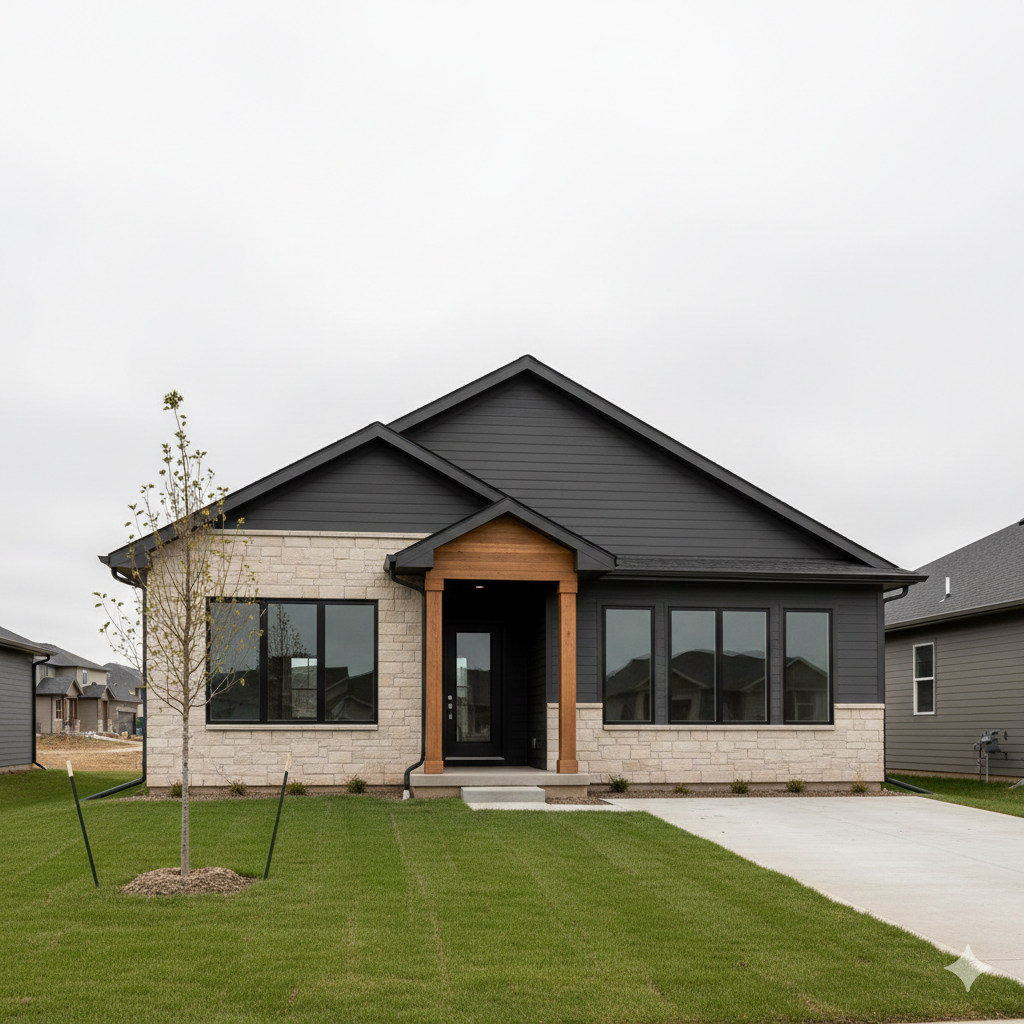
The Real 5-Year Cost Gap
Over five years in Omaha, new construction costs approximately $110,000 to $147,000 more than a comparable resale home when you account for all ownership expenses. This gap exists despite new construction offering lower insurance and utility costs.
The primary drivers of this difference are the $127,440 higher purchase price (median new construction at $473,620 versus $346,180 for resale), the SID tax burden on most new builds, and the significant hidden costs of landscaping, window treatments, and other move-in expenses that resale homes include.
| Cost Category | New Construction (5-Year) | Resale (5-Year) | Difference |
|---|---|---|---|
| Purchase Price | $473,620 | $346,180 | +$127,440 |
| Property Taxes | $66,520 – $75,995 | $43,800 | +$22,720 to +$32,195 |
| Insurance | $14,255 | $24,530 | −$10,275 |
| Utilities | $10,140 | $16,260 | −$6,120 |
| Maintenance/Repairs | $5,000 | $32,310 | −$27,310 |
| Home Warranty | $0 | $4,750 | −$4,750 |
| Hidden/Immediate Costs | $16,100 – $52,000 | $7,000 | +$9,100 to +$45,000 |
| 5-Year Total | $585,635 – $633,510 | $474,830 | +$110,805 to +$158,680 |
Equity and Appreciation
Omaha market data from 2024-2025 shows existing homes appreciating at 2.7% to 3.8% annually while new construction appreciates at only 0.1% to 0.4%. Over five years, this means a resale buyer builds roughly $48,000 more equity than a new construction buyer, further widening the financial gap.
New Construction Cost Profile
New construction in Omaha carries a median price of $473,620 at approximately $254 per square foot. While builder incentives of $20,000 to $100,000 in closing cost credits and rate buydowns can reduce effective costs, the ongoing expenses tell a more complete story.
Property Taxes with SID
Douglas County's effective property tax rate of 2.31% places Omaha as the third-highest among the 50 largest U.S. cities. Most new construction sits in Sanitary Improvement Districts (SIDs) that add 0.25% to 0.90% to this rate for 20 to 33 years. A $473,620 home with a mid-range 0.50% SID pays approximately $13,778 annually in property taxes—totaling $68,890 over five years.
Insurance and Utilities
New construction benefits from modern building codes and materials, resulting in annual insurance premiums around $2,851 compared to $4,906 for older homes. Energy efficiency from 2024 IECC code compliance saves 12% to 17% on utilities, bringing annual costs to approximately $2,028 versus $3,252 for resale homes.
Maintenance Years 1-5
Builder warranties typically cover workmanship in Year 1, mechanical systems in Year 2, and structural elements through Year 10. Annual maintenance during the first five years averages $500 to $1,500, primarily for HVAC tune-ups, landscaping upkeep, and minor warranty items. Major system costs are deferred until Year 8-12.
Resale Cost Profile
Resale homes in Omaha carry a median price of $346,180 at approximately $220 per square foot. The lower purchase price comes with trade-offs in ongoing costs, particularly for maintenance and insurance on aging systems.
Property Taxes Without SID
Most established Omaha neighborhoods fall within city limits, avoiding SID bonds entirely. At the 2.31% base rate, a $346,180 home pays approximately $7,994 annually. With Douglas County's 13.8% tax increase in 2024-2025 and assuming modest 5% annual growth, the five-year total reaches approximately $43,800.
Insurance and Utilities
Older homes cost significantly more to insure due to aging electrical, plumbing, and roofing systems. Nebraska averages show older home premiums at $4,906 annually—54% higher than new construction. Utility costs run 60% higher due to less efficient HVAC systems and insulation, averaging $3,252 annually.
Maintenance and Major Repairs
The standard budgeting rule of 1% of home value annually translates to $3,462 per year for routine maintenance. However, the median U.S. home purchased is 36 years old, meaning many systems approach or exceed their useful life.
Common replacement costs for aging systems include HVAC at $12,000 to $15,000, water heaters at $1,200, roofing at $6,000 to $13,000, and appliance packages at $2,100 to $5,400. Many resale buyers spend $10,000 to $15,000 on repairs within the first two years, with outlier cases reaching $40,000 or more for multiple system failures.
What Is a SID and Why It Matters
A Sanitary Improvement District is a financing mechanism for developments outside Omaha city limits. Developers issue bonds to pay for infrastructure—roads, sewers, utilities—and homeowners repay those bonds through additional property taxes for 20 to 33 years.
The Real Cost
On a $400,000 home with a 0.50% SID rate, you pay $2,000 annually for 20 years, totaling $40,000. At the higher 0.90% rate seen in some developments, the 25-year total reaches $90,000. This is in addition to your regular property taxes and is not separately deductible—all property tax falls under the $10,000 SALT cap. Learn more about the total new construction ownership costs.
Red Flags to Watch For
Be cautious when builders quote "low taxes" but only reference the base rate without disclosing SID obligations. New developments with streets not yet constructed typically carry high SID bonds. Most neighborhoods west of 180th Street or south of Giles Road are in SIDs. After the bond period ends, the SID dissolves and the property is annexed by Omaha, eliminating the SID tax while maintaining base property taxes.
Hidden Costs Most Buyers Miss
Both new construction and resale homes carry costs that don't appear on the purchase contract but significantly impact your first-year budget.
New Construction Hidden Costs
Landscaping runs $5,000 to $15,000 because builders provide minimal grading with no sod, plants, or fencing. HOA requirements sometimes mandate mature trees costing $1,000 or more each. Window treatments add $5,000 to $20,000—plantation shutters for a full home can reach $20,000, though basic blinds run $2,500 to $5,000. If appliances aren't included in the builder package, expect $2,100 to $10,000. Most developments require a one-time HOA capital fee of approximately $2,000 at closing.
Resale Hidden Costs
Inspection-revealed repairs typically run $5,000 to $15,000, with sellers crediting $0 to $5,000 and buyers covering the rest. System replacements in Year 1-2 can add $10,000 to $25,000 if the water heater fails at month six or the HVAC dies in Year 2. Energy efficiency upgrades like insulation, window film, and programmable thermostats cost $5,000 to $15,000 but often pay back through $100 to $200 monthly utility savings.
When New Construction Makes Financial Sense
Despite the higher 5-year cost, new construction can be the right choice under specific circumstances.
It Makes Sense If
You plan to stay 15 or more years, allowing the SID bond to pay off and avoiding two or three major system replacements that would affect a resale home. You have zero tolerance for maintenance surprises and value the peace of mind worth a $20,000 to $30,000 premium. You secure massive builder incentives of $50,000 to $100,000 in closing costs and rate buydowns, effectively dropping the purchase price to compete with resale. The resale alternative you're considering needs $50,000 or more in immediate or near-term repairs.
It Doesn't Make Sense If
You're moving in 5-7 years, where you absorb the full cost differential without the long-term benefits. You're handy or have contractor relationships that reduce repair costs by 40-60%. You find a "unicorn" resale—a 10-year-old home with recently replaced systems, established landscaping, and no major repairs needed for a decade. The SID rate exceeds 0.70% with a 25-year or longer payoff, making even avoided repair costs insufficient to justify the premium.
Questions to Ask the Builder
Before signing with a builder, these questions reveal the true cost of ownership that marketing materials often obscure.
SID Details: What is the exact SID tax rate and payoff year? Request the written SID bond schedule showing the 20, 25, or 33-year term.
Inclusions: What's included in base price versus extra? Ask specifically about landscaping packages, window treatments, appliances, fencing, irrigation, and outdoor lighting.
Fees: Are there HOA capital fees or anticipated special assessments? When does the developer hand off the HOA board to homeowners?
Warranties: What warranties come with the home and what do they NOT cover? Confirm Year 1, Year 2, and Year 10 coverage. Ask directly whether appliances are covered (usually they are not).
Taxes: What's the average annual property tax after the SID is added? Get this in writing—lender initial estimates often exclude SID.
Incentives: What builder incentives are available now? Are they negotiable? Do they expire?
Soil and Grading: What does the soil report show? West Omaha developments on former farmland can have compaction issues affecting foundation settling.
Questions to Ask a Resale Seller
These questions help you budget accurately and negotiate effectively when considering a resale home.
System Ages: How old are the HVAC, water heater, roof, and appliances? HVAC over 12 years means budgeting $12,000 to $15,000 for replacement. Water heaters over 10 years need $1,200 set aside. Roofs over 20 years may need $6,000 to $13,000.
Maintenance History: What repairs or maintenance have been done in the last 5 years? "Nothing" is a red flag; recent system updates are green flags.
Known Issues: Are there any known issues with foundation, plumbing, or electrical? Ask directly about settling, cracks, or leaks. Homes over 30 years often need electrical panel upgrades at $2,000 to $5,000.
Utility Bills: What are actual utility bills by season? Request 12 months of bills and compare to new construction benchmarks of $198 summer and $140 winter. A seller reporting $400 monthly summer bills indicates poor insulation or aging HVAC.
Warranty: Is there a home warranty and will you provide one? A seller-provided one-year warranty at $500 to $600 offsets some repair risk.
Insurance Claims: Have you had any insurance claims for mold, water damage, or foundation issues? Disclosure requirements apply when asked directly, and claims history affects your future rates.
The Bottom Line
For buyers planning to stay 5-10 years, resale homes typically offer better financial outcomes with lower total costs and stronger equity growth. For buyers committing to 15 or more years who value minimal maintenance and modern efficiency, new construction's higher upfront cost can eventually balance out—especially with significant builder incentives.
The key is calculating YOUR specific scenario: your timeline, your tolerance for repairs, the actual SID rate on any new construction you're considering, and the condition of systems in any resale home you're evaluating. Neither option is universally better—the right choice depends entirely on your circumstances.
If you're weighing these options for your next move, I'd be glad to walk through the numbers specific to the homes you're considering. Sometimes the "right" home isn't the one with the lowest purchase price or the newest construction—it's the one that fits your financial plan and lifestyle for the years ahead.
Schedule a consultation to discuss your new construction versus resale comparison.
About Linda Moy
Move-Up & Sell-to-Buy Real Estate Specialist | Nebraska Realty
Linda Moy specializes in helping homeowners sell their current home and move up with clarity, confidence, and control. Her approach focuses on timing strategy, equity optimization, and protecting clients from common sell-to-buy risks like double payments, missed opportunities, or rushed decisions.
A consistent top producer, Linda is known for her calm leadership, detailed planning, and ability to align selling and buying timelines smoothly. Her work has earned multiple honors, including Rookie of the Year, Entrepreneur of the Year (Women's Council of Realtors®), and the Nebraska Realty Renne Lampman Award for outstanding service.
Originally from McCook, Nebraska, Linda has called Omaha home since 1993 and remains deeply involved in the community, including board service with the Divine Mercy Food Pantry.
Thinking about moving up?
Let's map your move together
Categories
Recent Posts

SCHEDULE YOUR MOVE-UP STRATEGY SESSION
Move WITHOUT the stress, double moves, or leaving equity on the table.
Karen Keller

Kyle Andersen
Chloe King
Connie Karnes
Brenna Allen
Kayla Mack
Vicki Smith
Tyler Steel
Dawson Spurgis