
Property Taxes After Buying a Home in Omaha — What Changes, When, and How Much
One of the most common financial surprises for new homeowners in Omaha: your property tax bill looks nothing like what the seller was paying. Nebraska reassesses properties based on the most recent sale price, which means that the tax bill you see in the listing history — often based on an old assessment or a below-market purchase — has almost nothing to do with what you'll pay in year two of ownership. For buyers purchasing at current Omaha prices, a tax increase of $1,500–$4,000 per year after reassessment is common.
This guide explains exactly how Nebraska's property tax reassessment works, when the increase hits your bill, and what you can do to budget for it and potentially appeal if the assessment seems too high.

Why Your Property Taxes Changed After Purchase
Nebraska assesses all properties annually on January 1 at 12:01 AM—your purchase transaction does not automatically change your home's assessed value. The assessment date determines the value for the entire following tax year. Assessors use your sale price as market data for mass appraisal across all properties in your neighborhood, not just yours.
The confusion compounds because Douglas and Sarpy Counties collect taxes in arrears. Taxes assessed in 2024 are paid in 2025. At closing, you reimbursed the seller for a prorated share of the prior year's taxes. Your first full tax bill arrives 6 to 18 months after purchase, reflecting an assessment that may have increased since the seller's last payment.
What Actually Causes Tax Changes
Several factors drive increases independent of your purchase:
- Annual reassessment affects all properties, not just those that sold recently
- Market-wide value increases apply uniformly using mass appraisal techniques
- Physical inspections within the six-year cycle may reveal undocumented features
- New construction transitions from land-only to full building assessment
- SID bonds mature or new infrastructure assessments begin
- Local government levy rates may change, though Douglas and Sarpy rates remain relatively stable
Douglas and Sarpy County Assessment Timeline
Both counties follow Nebraska's state-mandated assessment calendar. Understanding these dates helps you monitor and respond to changes before they become locked in.
Douglas County Timeline
| Date | Event |
|---|---|
| January 1, 12:01 AM | Assessment date—property valued as of this moment |
| January 15 | Preliminary valuations posted online |
| January 15 – March 1 | Informal review period—meet with assessor to discuss preliminary value |
| March 25 | County assessor completes annual assessment |
| By June 1 | Notices of valuation change mailed |
| June 1–30 | Formal protest period—file Form 422 with County Board of Equalization |
| July 25 | County Board of Equalization finalizes decisions |
| September 10 | Deadline to appeal to TERC (Tax Equalization and Review Commission) |
| Following year: March 31 and July 31 | Taxes paid (in arrears) |
Sarpy County Timeline
Sarpy County follows the same state-mandated framework with minor variations. Valuation change notices are sent by June 1, with the formal protest window running June 1–30. The deadline to appeal to TERC falls on August 25, slightly earlier than Douglas County. Sarpy uses eight geographic valuation groups for market analysis and maintains the lowest county levy rate since at least 1985 at $0.28496 per $100 of valuation.
Mass Appraisal Methodology
Assessors employ professionally accepted mass appraisal techniques mandated by Nebraska statute. The sales comparison approach is the primary method for residential properties—assessors analyze arm's-length transactions (willing buyer, willing seller, market conditions) and adjust for location, property characteristics, time trends, and condition. Mass appraisal values all properties uniformly; assessors cannot "chase" individual sale prices. Physical inspections are required every six years per state statute.
New Construction vs. Resale: The Escrow Shock
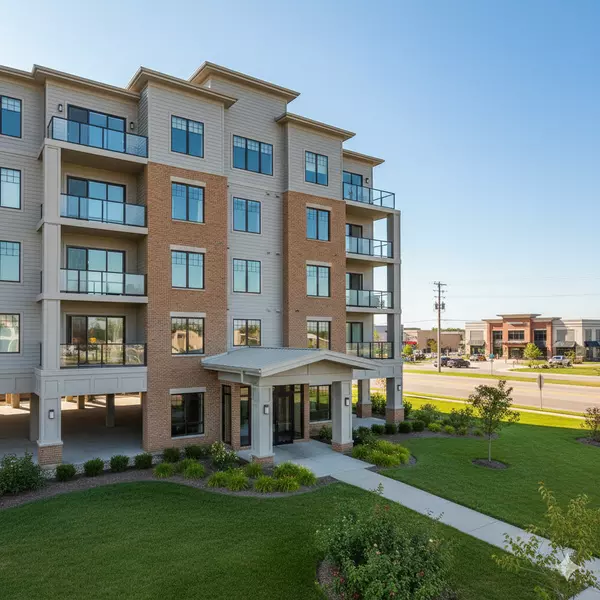
New construction properties face the most dramatic tax increases, often catching buyers completely off guard. Understanding this pattern is essential if you're buying a newly built home in Elkhorn, Bennington, Gretna, or other growing areas.
Unexpected tax increases can change debt-to-income ratios after closing. This is especially relevant for buyers exploring financing options that involve owning two homes temporarily.
How New Construction Creates Escrow Shortages
During construction, your property is taxed as vacant land only. Builders often close homes mid-construction or immediately after completion, and your first escrow payment is based on land-only taxes—artificially low. After the January 1 assessment following completion, the county assesses land plus the full improvement. Tax bills can increase tenfold or more.
Real-World Example: Bennington, Douglas County (2023)
| Year | Assessment Basis | Assessed Value | Annual Tax |
|---|---|---|---|
| 2023 | Land only | $55,400 | $1,325 |
| 2024 | Land + building | $645,000 | $15,446 |
This represents an increase of over 1,000 percent. The monthly mortgage escrow payment jumped more than 50 percent. Buyers who underwrote their loan based on the closing disclosure showing land-only taxes received an escrow shortage notice 12 to 18 months after closing, with monthly payment increases exceeding $300 to $500.
Resale Properties: More Predictable
Resale properties offer more stability. The prior owner's tax history is visible in MLS listings and assessor records. Annual increases typically follow market trends of 5 to 7 percent in Douglas County. Dramatic jumps are unlikely unless major unreported improvements are discovered during inspection cycles.
How to Budget Accurately
For new construction, budget for taxes on your purchase price, not the land-only estimate shown at closing. Use this formula: Purchase price × county effective tax rate = realistic annual tax. Douglas County's effective rate is approximately 1.8 percent; Sarpy County's is approximately 1.85 percent. A $400,000 home at 1.85 percent equals $7,400 in annual taxes, or approximately $617 per month in escrow.
How to Anticipate Future Tax Changes
Proactive monitoring prevents surprises. Whether you're buying or already own, these steps help you plan for changes before they affect your monthly payment.
Before You Buy: Due Diligence Checklist
- Look up the property on the county assessor website by address
- Review the full assessment history, not just the current year
- Check if the property is in the six-year physical inspection cycle
- Confirm SID status and remaining bond obligations
- Calculate taxes on purchase price × effective rate for new construction
- For resale, add a 5 to 8 percent annual increase buffer to the current assessment
- Request the seller's most recent valuation notice
Understanding Your Notice of Valuation Change
The notice is mailed by June 1 if your value changed from the prior year. It shows the prior year value, current year value, and an estimated tax that assumes prior year levy rates—actual rates are set later. The notice includes assessment methodology, comparable properties, and the protest deadline. To calculate your estimated tax: Assessed value ÷ 100 × consolidated tax rate = annual tax.
When to Expect Increases
- Years 1–2 after purchase if the January 1 assessment reflects new market sale prices
- New construction in the year after building assessment is added
- During strong market years with increases of 7 to 15 percent (Nebraska has no statutory cap)
- When your property enters the six-year inspection cycle
- After renovation if permits were pulled for additions, finished basements, or major upgrades
- In SID areas with annual bond levy payments until bonds retire (typically 20 to 30 years)
When and How to Protest Your Assessment
If your assessed value exceeds market value or is unequal compared to similar properties, you have grounds to protest. The formal protest window is June 1–30 after receiving your notice of valuation change. Douglas County offers an earlier informal review period from January 15 to March 1 using preliminary values.
Essential Evidence for a Protest
- Recent comparable sales in your neighborhood
- Independent appraisal if available
- Property condition photos showing defects or deferred maintenance
- The assessor's property record card showing errors
- Sales analysis demonstrating unequal assessment
File Form 422 during the June 1–30 protest period. If unsatisfied with the County Board of Equalization's decision, appeal to TERC by September 10 in Douglas County or August 25 in Sarpy County.
If you're planning to sell and buy in the Omaha metro, understanding how property taxes will shift during your transition is essential to accurate budgeting. I help my clients model these scenarios as part of our sell-to-buy planning process. Reach out if you'd like to discuss your situation.
Frequently Asked Questions
Does buying a home trigger an automatic reassessment?
No. Nebraska assesses all properties annually on January 1 regardless of ownership changes. Your purchase does not automatically trigger reassessment, but your sale price becomes market data used in mass appraisal for your neighborhood.
Why did my taxes go up if I just bought the house?
You likely purchased between assessment dates. Nebraska taxes are assessed annually on January 1 and paid in arrears the following year. If you bought after January 1, 2024, you paid 2023 taxes at closing (prorated). Your first full tax bill reflects the January 1, 2025 assessment, which captures market increases that occurred in 2024.
The previous owner paid $3,000 in taxes. Will mine be the same?
Not necessarily. Three factors cause differences: annual reassessment may increase value, tax levy rates may change, and timing means you may pay a different tax year than the seller's last bill reflected. Always multiply the current assessed value by the current levy rate for an accurate estimate.
Can the county increase my taxes just because I paid more than the last sale price?
Sale price alone doesn't determine your assessment. Assessors use mass appraisal analyzing all comparable sales in your market area. If properties similar to yours sold for higher prices, all homes in that class may see increases—not just recently sold ones. Nebraska law prohibits assessing based solely on your purchase price.
What is an SID and why is it on my tax bill?
A Sanitary and Improvement District is a special taxing district created for new developments outside city limits. SIDs issue bonds to fund infrastructure (streets, sewers, utilities) and levy property taxes for 20 to 30 years to repay bonds. SID taxes are in addition to county, city, and school taxes.
How often does Douglas or Sarpy County reassess properties?
Nebraska requires annual assessment of all properties as of January 1. However, physical inspections occur on a six-year rotating cycle—assessors must physically inspect every property once every six years. Between inspections, desktop reviews use sales data, permits, and aerial imagery.
Why are Nebraska property taxes so high?
Nebraska ranks seventh nationally for property tax burden at approximately 1.54 percent effective rate versus the 0.90 percent national average. Contributing factors include heavy reliance on property tax for schools and local services, no state income tax offset, rapid property appreciation over the past decade, and no constitutional caps on assessment increases.
Can my property taxes decrease?
Yes, if market values decline or you successfully protest an overassessment. Nebraska has no Proposition 13-style protection limiting decreases. Properties can lose value just as they gain value. Additionally, levy rate decreases (though rare) would lower taxes even if assessed value holds steady.
I have an escrow account. Do I still need to worry about property taxes?
Yes. Escrow accounts are estimated projections. If your assessment increases significantly, your escrow account becomes underfunded, triggering a shortage notice and higher monthly payments. Review your annual escrow analysis statement and monitor your property's assessed value independently.
What's the difference between assessed value and market value?
In Nebraska, they should be the same. Residential property must be assessed at 92 to 100 percent of actual market value. "Assessed value" is the official value the county establishes for tax purposes. "Market value" is what a willing buyer would pay. If they differ significantly, you have grounds to protest.
How do I calculate what my taxes will be?
Formula: (Assessed value ÷ 100) × Consolidated levy rate = Annual tax. Example: $300,000 assessed value with a $2.10 levy rate equals ($300,000 ÷ 100) × 2.10 = $6,300 annual tax. The consolidated levy rate includes county, city, schools, and special districts. Check the county treasurer website for your specific levy.
What if I made improvements after buying—will my taxes go up?
Yes, if you pulled building permits or the improvements are visible in assessor inspections or aerial imagery. Additions, finished basements, garages, pools, and major renovations increase assessed value. Maintenance and repairs such as a new roof, HVAC, or paint typically don't trigger increases unless they substantially change property characteristics.
Why did my neighbor's taxes go up less than mine?
Several possibilities exist: different assessment timing in the six-year inspection cycle, a successful protest on their part, differences in property characteristics (condition, size, upgrades), qualification for a homestead exemption you don't have, or location in a different taxing district (SID, school boundary).
How long do I have to appeal after receiving my assessment notice?
The formal protest deadline is June 30 (must file within the June 1–30 window). If you miss the county-level protest, you cannot appeal to TERC. Douglas County offers an earlier informal review from January 15 to March 1. If unsatisfied with the County Board decision, appeal to TERC by September 10 (Douglas and Lancaster) or August 25 (other counties).
About Linda Moy
Move-Up & Sell-to-Buy Real Estate Specialist | Nebraska Realty
Linda Moy specializes in helping homeowners sell their current home and move up with clarity, confidence, and control. Her approach focuses on timing strategy, equity optimization, and protecting clients from common sell-to-buy risks like double payments, missed opportunities, or rushed decisions.
A consistent top producer, Linda is known for her calm leadership, detailed planning, and ability to align selling and buying timelines smoothly. Her work has earned multiple honors, including Rookie of the Year, Entrepreneur of the Year (Women's Council of Realtors®), and the Nebraska Realty Renne Lampman Award for outstanding service.
Originally from McCook, Nebraska, Linda has called Omaha home since 1993 and remains deeply involved in the community, including board service with the Divine Mercy Food Pantry.
Thinking about moving up?
Let's map your move together
Categories
Recent Posts



SCHEDULE YOUR MOVE-UP STRATEGY SESSION
Move WITHOUT the stress, double moves, or leaving equity on the table.
Karen Keller

Kyle Andersen
Chloe King
Connie Karnes
Brenna Allen
Kayla Mack
Vicki Smith
Tyler Steel
Dawson Spurgis