
Making a Contingent Offer in Omaha? (Dec 2025 Market Guide)
Making an offer contingent on selling your current home is one of the most significant decisions move-up buyers face in Omaha's December 2025 market. This guide breaks down when contingent offers work, when they fail, and what alternatives exist—so you can move forward with clarity rather than uncertainty.
Will Omaha Sellers Accept a Contingent Offer Right Now?
Omaha's December 2025 market shows moderate acceptance likelihood for contingent offers—better than peak 2024 conditions but still competitive. Inventory has increased 14-16% year-over-year, days on market have stretched to 22-44 days (compared to the frenzied 6-9 days of recent years), and December's seasonal slowdown means fewer competing buyers. These shifts create more seller flexibility than we've seen in several years.
However, 26% of transactions are still cash buyers—a 22-year high—which means sellers continue to receive non-contingent alternatives. Your acceptance probability increases substantially when your current home is already under contract rather than merely listed, when you offer a short 30-day contingency window rather than the standard 60-90 days, and when you include a kick-out clause that protects the seller's interests.
In my experience working with move-up buyers across Elkhorn, Bennington, and the greater Omaha metro, the difference between a rejected contingent offer and an accepted one often comes down to how the offer is structured—not whether the contingency exists at all.
When Contingent Offers Fall Apart
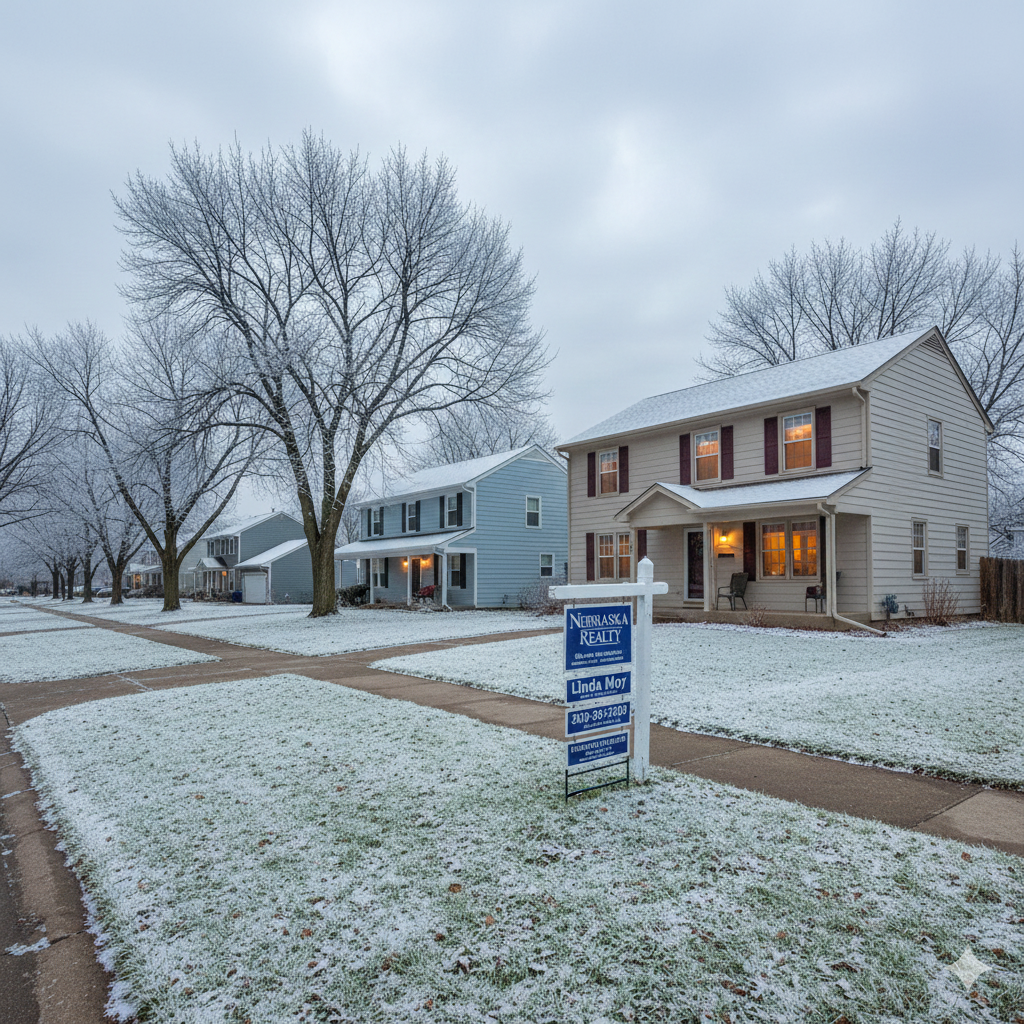
Contingent offers fail for predictable reasons, and understanding these failure points helps you avoid them. The most common cause is straightforward: the buyer's home doesn't sell within the contingency window, which typically runs 30-90 days. When that deadline passes without a sale, the seller terminates the contract.
The second major failure mechanism involves kick-out clauses. When a seller receives a superior non-contingent offer, they notify the original buyer, who then has 24-72 hours (increasingly just 24-48 hours in today's market) to remove all contingencies or walk away. Most buyers cannot instantly convert to a non-contingent position, so they lose the deal.
Other failure patterns include: the buyer's home being overpriced for its submarket, which extends the selling timeline beyond the contingency period; inspection or appraisal problems on the buyer's current home that cause their sale to collapse; and the buyer's buyer backing out, creating a chain reaction that unravels the entire transaction.
National data shows a baseline cancellation rate of about 5% for all accepted offers, though August 2025 saw rates spike to 15.1%—the highest on record. Home sale contingencies add an additional layer of risk beyond this baseline.
When Contingent Offers Actually Work
The strongest contingent offers share specific characteristics. First and most importantly: the buyer's home is already under contract, not just listed. This converts a sale contingency into a settlement contingency, which sellers view as dramatically lower risk because the timeline becomes concrete rather than hypothetical.
Short contingency windows—21-30 days rather than 60-90—signal urgency and reduce the seller's exposure time. Properties that have been on the market for 30 or more days present better opportunities, as seller motivation increases and competing offers decrease. Higher earnest money deposits (3-5% rather than the standard 1-2%) demonstrate financial commitment and help offset the seller's risk perception.
Buyers who can prove bridge financing pre-approval or demonstrate the ability to carry two mortgages temporarily also strengthen their position significantly. These financial backstops reassure sellers that the transaction will close even if timing shifts.
Omaha's December 2025 conditions favor contingent offers more than recent years. The market is transitioning from hot to balanced, inventory is rising, and the slower winter season reduces bidding competition. This creates more room for negotiation than move-up buyers have had since before the pandemic.
How Kick-Out Clauses Protect Both Sides
A kick-out clause allows the seller to continue marketing their home and accept backup offers even after accepting your contingent offer. When a superior offer arrives, the seller notifies you, and you typically have 24-72 hours to make a decision: remove all contingencies and agree to close within 30 days, or walk away with your earnest money intact.
From the seller's perspective, this protection is essential. Without it, their home sits off-market for 30-90 days while they wait for your home to sell—and if your sale falls through, they've lost momentum and their listing appears stale when they start over.
From your perspective as a buyer, the kick-out clause creates pressure but also provides a defined exit. You know the rules in advance: if you're kicked out and can't waive contingencies, you recover your earnest money. The clause also gives you time to pursue your sale aggressively, knowing exactly what's at stake.
In today's Omaha market, I recommend offering a 48-hour response window rather than 72 hours. This demonstrates confidence and reduces seller hesitation about accepting your contingent offer in the first place.
Making Your Contingent Offer Competitive
A competitive contingent offer in Omaha's December 2025 market combines six elements. Start with the strongest foundation: have your current home already under contract before making offers on new properties. This single change transforms your position from speculative to concrete.
Limit your contingency period to 30 days. Omaha's current 22-44 day listing-to-contract timeline makes this realistic if your home is priced correctly and actively marketed. Include a kick-out clause with a 48-hour response window—this protects the seller while demonstrating your confidence.
Increase your earnest money to 3-5% of the purchase price rather than the standard 1-2%. This signals commitment and creates real skin in the game. If possible, obtain a bridge loan pre-approval letter to show you can close even if your original home sale timing shifts.
Finally, offer a financial sweetener: 2-5% above asking price or coverage of $3,000-5,000 in seller closing costs. This compensates the seller for accepting your contingency rather than waiting for a cleaner offer.
Bridge Loans: Eliminating the Contingency Entirely
A bridge loan is short-term financing that uses your current home's equity to fund your new purchase. When your original home sells, you pay off the bridge loan. The strategic advantage is significant: you eliminate the home sale contingency entirely and compete as a non-contingent buyer.
Qualification requirements include a credit score of 660-740 or higher (most lenders require 700+), a debt-to-income ratio below 50% when carrying both mortgages, and 15-30% equity in your current home. Your current home must be actively listed for sale. Loan amounts typically range from $45,000 to $500,000, with terms of 3-12 months and interest-only payments.
Approval can happen in as little as 72 hours, with funding sometimes within two weeks. Fees run approximately 2% of the loan amount, and interest rates exceed conventional mortgages.
For Omaha move-up buyers with 20% or more equity and strong credit, bridge financing makes particular sense in the current market. Homes are selling in 22-44 days on average, so a standard bridge term covers the typical sale cycle with buffer room. The carrying costs—roughly $1,500-2,000 per month on a $250,000-300,000 mortgage at current rates—require a financial cushion but are manageable for most qualified borrowers.
Sale contingencies are one of the most common tools used to manage sequencing risk. Whether they’re viable depends heavily on the sell-first versus buy-first strategy chosen.
Rent-Back Agreements as a Negotiating Tool
A rent-back agreement allows the seller to stay in the home after closing as a tenant, paying rent to the buyer for a specified period. This arrangement addresses one of sellers' primary concerns when evaluating contingent offers: the gap between selling their current home and closing on their next one.
Typical rent-back terms include a duration of 30-60 days (lender restrictions often limit longer periods), rental rates based on the buyer's daily mortgage cost or local market rent, a security deposit to cover potential damages or unpaid rent, and clear move-out deadlines with penalties for overstaying.
When making a contingent offer, you can use rent-back as a sweetener: "Accept my contingent offer, and I'll provide a 30-day free rent-back after your purchase closes." This offsets the contingency risk by addressing the seller's housing gap concern directly. It's a concrete benefit that many sellers find compelling, particularly those who are also buying contingent on their own sale.
Timing Strategies for Move-Up Buyers
Beyond contingent offers and bridge loans, several timing strategies can help you navigate the move-up process.
Sell First, Then Buy
List and sell your current home, accept an offer and go under contract, then make offers on new properties with a settlement contingency (not a sale contingency). This approach means you know your exact sale proceeds before committing to a purchase, you compete with the stronger settlement contingency, and you eliminate the risk of carrying two mortgages. The tradeoff: you may need temporary housing between closings, and you'll face pressure to find your next home quickly once you're under contract.
Simultaneous Closings
Coordinate both transactions to close on the same day, with proceeds from your sale immediately funding your purchase. This requires precise coordination: same title company handling both transactions (ideal), wire transfers rather than physical checks, and typically selling in the morning and buying in the afternoon. The risk is cascade failure—any delay in your sale closing pushes back your purchase closing.
Extended Closing Timeline
Accept an offer on your current home with a 60-90 day closing rather than the standard 30-45 days. Use that extended window to find and close on your new home. Some sellers accept extended closings if they're financially secure in their current housing; December's slower market may increase this willingness.
Buy First (If Financially Qualified)
If you can qualify for two mortgages simultaneously and have 20-30% for a down payment without sale proceeds, you can purchase your new home first, move in, then list your current home afterward. This eliminates the home sale contingency entirely, lets you take time finding your ideal next property, and means your current home shows empty (which typically speeds the sale). The tradeoff is carrying costs for both properties until your original home sells.
How Long It Takes to Sell in Omaha Right Now
December 2025 data shows Omaha homes taking 22-44 days from listing to accepted offer, with an additional 30-45 days from contract to closing. Total timeline: 52-89 days from listing to keys in hand. "Hot homes"—top-tier properties priced correctly—sell in 6-15 days and typically go 3-4% above list price. Average homes sell for 1-2% above list after approximately 28 days on market.
December's seasonal slowdown adds 7-14 days to baseline timelines. Inventory for existing homes is up 16.9% year-over-year, giving buyers more choices and extending decision timelines.
For comparison, the national median is 54 days to accepted offer plus 24.5 days to close—about 78.5 days total. Omaha's 52-89 day range remains slightly faster than the national average, reflecting the Midwest's relative stability and moderate competition level (Redfin rates Omaha at 61 out of 100 on their Compete Score).
| Property Type | Days to Offer | Days to Close | Total Timeline |
|---|---|---|---|
| Hot Homes (priced right, move-in ready) | 6-15 | 30-45 | 36-60 days |
| Average Homes | 22-28 | 30-45 | 52-73 days |
| December Seasonal Adjustment | +7-14 | — | 59-89 days |
The Real Risks of Waiving Your Home Sale Contingency
If you waive your home sale contingency—whether voluntarily or through a kick-out clause—you must close within approximately 30 days regardless of whether your current home has sold. This creates genuine financial exposure.
Carrying two mortgages simultaneously means additional costs of roughly $1,500-2,000 per month on a $250,000-300,000 mortgage at current 6-7% interest rates. Waiving the home sale contingency typically requires waiving all other contingencies as well—financing, inspection, appraisal—eliminating your contractual exit routes.
If you can't close after waiving contingencies, you forfeit your earnest money and the seller may pursue legal remedies. You may also face pressure to dramatically reduce the price on your current home to sell quickly, taking a financial loss to meet your closing deadline.
Only consider waiving your home sale contingency if you can qualify for two mortgages simultaneously (debt-to-income ratio below 43-50%), you have six or more months of reserves to carry both properties, or you can secure a bridge loan to cover the gap. In Omaha's current market, where homes typically sell in 22-44 days, the risk is moderate if your home is priced correctly—but December's seasonal slowdown means you should build in extra buffer.
Next Steps for Omaha Move-Up Buyers
The decision to make a contingent offer depends on your specific financial situation, your current home's market position, and your risk tolerance. Omaha's December 2025 market offers more flexibility for contingent buyers than we've seen in years, but competition from cash buyers remains significant.
If you're considering a move-up purchase in Gretna, Elkhorn, Bennington, or anywhere in the Omaha metro, I can help you evaluate whether a contingent offer, bridge financing, or a different timing strategy makes the most sense for your circumstances. View current listings or schedule a consultation to discuss your options.
About Linda Moy
Move-Up & Sell-to-Buy Real Estate Specialist | Nebraska Realty
Linda Moy specializes in helping homeowners sell their current home and move up with clarity, confidence, and control. Her approach focuses on timing strategy, equity optimization, and protecting clients from common sell-to-buy risks like double payments, missed opportunities, or rushed decisions.
A consistent top producer, Linda is known for her calm leadership, detailed planning, and ability to align selling and buying timelines smoothly. Her work has earned multiple honors, including Rookie of the Year, Entrepreneur of the Year (Women's Council of Realtors®), and the Nebraska Realty Renne Lampman Award for outstanding service.
Originally from McCook, Nebraska, Linda has called Omaha home since 1993 and remains deeply involved in the community, including board service with the Divine Mercy Food Pantry.
Thinking about moving up?
Categories
Recent Posts


SCHEDULE YOUR MOVE-UP STRATEGY SESSION
Move WITHOUT the stress, double moves, or leaving equity on the table.
Karen Keller

Kyle Andersen
Chloe King
Connie Karnes
Brenna Allen
Kayla Mack
Vicki Smith
Tyler Steel
Dawson Spurgis