
Patio Home vs Townhome vs Condo in Omaha — The Real Differences, Costs & Which Is Right for You
The terms "patio home," "townhome," and "condo" get used interchangeably in Omaha listings — and they're not the same thing. The distinction matters because it affects what you own, what your HOA covers, what you're responsible for maintaining, and how the home will be financed and insured.
In Omaha specifically, the patio home market has grown significantly in southwest Omaha, Elkhorn, and Gretna, attracting downsizers, empty nesters, and buyers who want a detached or semi-detached home without yard work. This guide explains the actual differences between all three, how they're priced in the current Omaha market, and which type tends to make sense for which kind of buyer.
Patio Homes: What You Actually Own and Maintain
A patio home is a single-story attached home where you own both the building and the land underneath it. This ownership structure sits between a condo (where you own only interior space) and a detached single-family home. In Omaha, patio homes typically share one or more walls with neighbors in a cluster or zero-lot-line configuration.
The primary advantage is ownership clarity. Your land appreciates, your structure belongs to you, and major decisions about your property remain in your control. HOA fees in Omaha patio home communities typically run $75 to $200 monthly, covering landscaping of common areas while leaving your individual lot maintenance to you.
<
What You're Responsible For
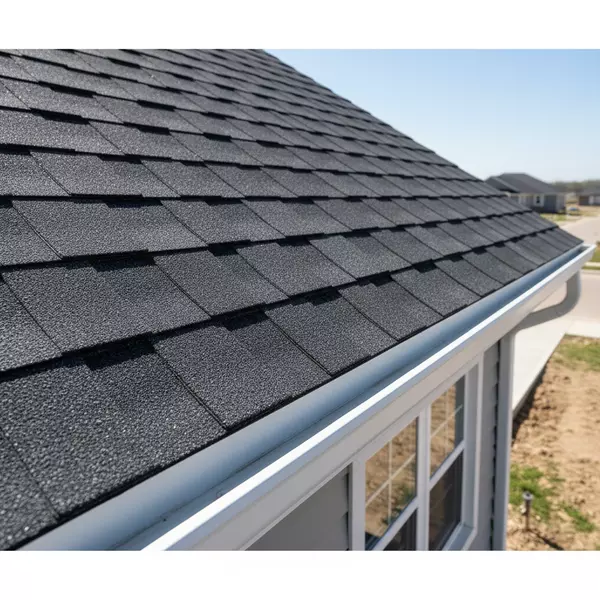
Despite "low-maintenance" marketing, patio home ownership includes real ongoing responsibilities. You handle winter snow removal unless your specific HOA documents state otherwise. Roof replacement falls entirely on you, typically costing $8,000 to $15,000 on a 15 to 20 year cycle. Annual gutter cleaning, driveway sealing every two to three years, and seasonal landscaping remain your tasks.
Omaha Pricing
New construction patio homes in communities like Anchor Pointe, Granite Lake, and St. Andrew's Point range from $300,000 to $350,000. Gently used units from the past three to five years fall between $250,000 and $320,000. Older communities offer entry points around $200,000 to $280,000.
Townhomes: The Roof Question That Changes Everything
Townhomes are multi-story attached homes where you own the building and underlying land. They typically offer more space per dollar than condos, with two to three levels providing room for guest bedrooms, home offices, or hobby spaces. The multi-level design attracts families, downsizers seeking space, and first-time buyers—creating a broader resale market.
The critical question every townhome buyer must answer: who pays for the roof? This single detail determines whether you face predictable HOA-funded repairs or surprise five-figure bills.
Shared Roof vs. Individual Roof
If townhomes in a community share one continuous roofline, the HOA typically covers replacement through reserve funds. If each unit has a clearly separate roof structure, you bear full replacement responsibility. This varies dramatically by community and is the most important point to clarify in writing before any purchase.
What You're Responsible For
Beyond the roof question, townhome owners typically handle front and back yard maintenance, deck or patio staining every three to five years, siding inspection and minor repairs, and all interior systems. Snow removal falls to you unless specifically included in HOA services.
Omaha Pricing
New construction townhomes like those in Sunset Meadows start around $275,000 to $290,000. Established communities including Falcone Ridge, Stone Creek Village, and Piedmont offer three to seven year old units from $220,000 to $280,000. Older inventory runs $180,000 to $250,000 with HOA fees typically between $75 and $150 monthly.
Condos: True Lock-and-Leave With Trade-Offs
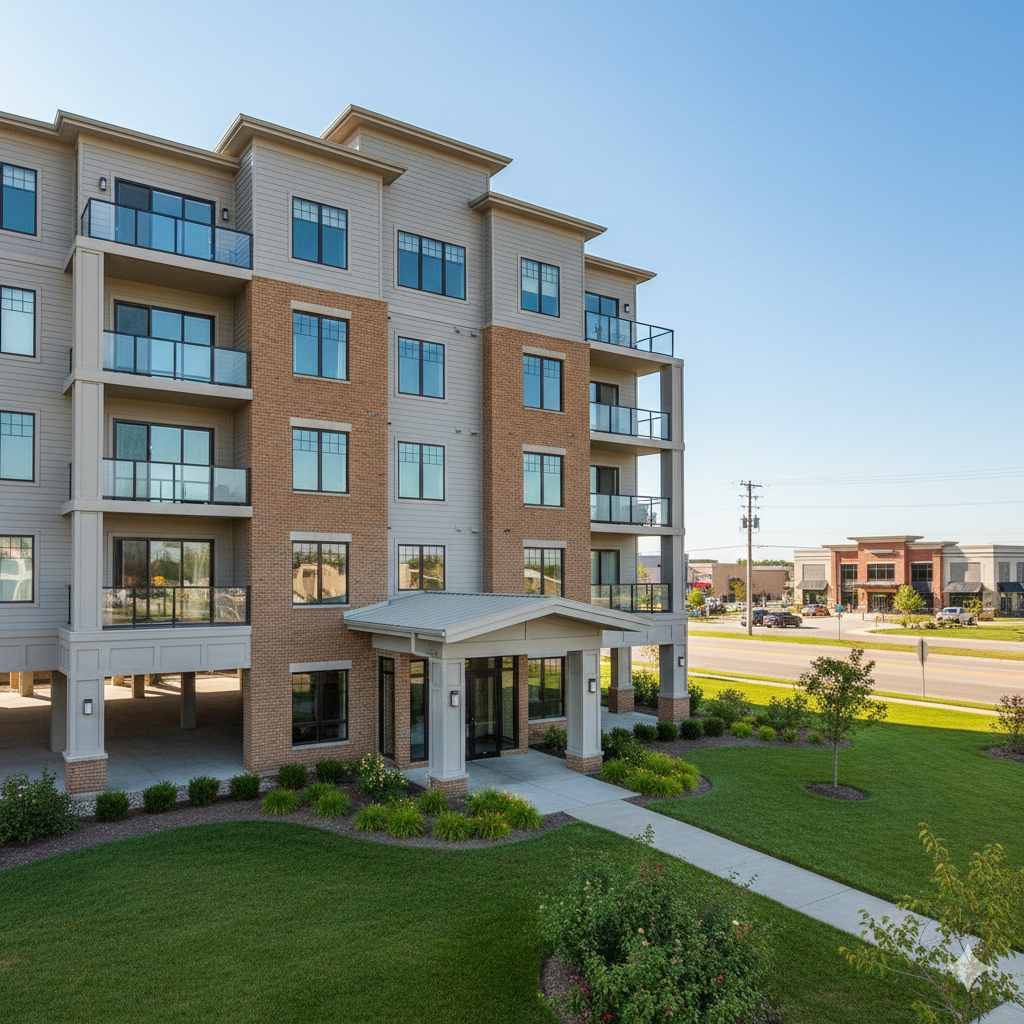
A condo means owning only your interior unit within a multi-unit building. You share walls, hallways, roof, parking, and amenities with other owners. The HOA covers all exterior maintenance, structural repairs, landscaping, and snow removal. For downsizers who genuinely want zero property responsibilities, condos deliver on that promise.
The trade-off is cost structure and control. Monthly HOA fees in Omaha condos typically run $150 to $400, covering extensive services but also funding amenities you may never use. Special assessments—unexpected bills for major repairs—represent real financial risk.
The Special Assessment Reality
When a condo building needs a $50,000 roof replacement, that cost gets split among unit owners. In a 50-unit building, each owner faces roughly $1,000. Larger repairs or poorly funded reserves can trigger assessments of $2,000 to $5,000 or more. Nebraska law places no cap on assessment frequency.
Omaha Pricing
Downtown and Midtown units including areas near Old Market offer two-bedroom configurations from $200,000 to $250,000. West Omaha high-amenity buildings with pools, fitness centers, and security run $250,000 to $350,000. Older downtown properties like Latvian Tower and Regis provide entry points around $175,000 to $220,000, with some including utilities in HOA fees.
Who Each Option Fits Best
The right choice depends on your specific priorities, physical capabilities, and financial situation. Each structure serves distinct downsizer profiles well while creating genuine problems for others.
Patio Homes Work Best If You
Single-story living without stairs matters for accessibility. You prefer owning something tangible—both land and structure. You're willing to handle minor exterior maintenance like yard care and gutters. Lower HOA fees and fee predictability fit your budget planning. You don't need resort-style shared amenities. You can save $500 monthly toward eventual roof replacement. You plan to stay 15 years or longer to capture land appreciation.
Townhomes Work Best If You
You want more space than a condo at a lower price point. Land ownership and multi-level living appeal to you. A guest bedroom for visiting adult children or grandchildren matters. You're comfortable with shared walls but want a private yard or patio. You'll clarify roof responsibility in writing before purchase. You plan 10 or more years of ownership to benefit from stronger resale appreciation.
Condos Work Best If You
Zero exterior maintenance is genuinely non-negotiable. You want true lock-and-leave capability for frequent travel. You need the highest level of shared amenities including pools, fitness centers, and security. Mobility limitations make yard care impossible. You live in or prefer an urban core with walkability. You're comfortable with neighbor proximity and shared walls. Risk-averse budgeting favors predictable HOA costs over surprise individual repairs.
Real Cost Comparison Over 10 and 20 Years
Monthly payment comparisons miss the full picture. A comprehensive cost view includes mortgage payments, HOA fees with expected increases, property taxes, insurance, maintenance responsibilities, and probable repair costs. These projections assume current Omaha pricing, a 7% mortgage rate, and 3% annual HOA fee increases.
Patio Home at $310,000
| Cost Category | Monthly | 10-Year Total | 20-Year Total |
|---|---|---|---|
| Mortgage (30yr, $240k financed) | $1,598 | $191,760 | $383,520 |
| HOA fees ($125/mo avg with increases) | $127 | $18,950 | $41,620 |
| Property taxes (1.0%) | $258 | $31,000 | $62,000 |
| Insurance | $130 | $15,600 | $31,200 |
| Maintenance (yard, gutters) | $100 | $12,000 | $24,000 |
| Roof reserve (due year 18) | — | — | $10,000 |
| Total | $2,213 | $269,310 | $552,340 |
Townhome at $270,000
| Cost Category | Monthly | 10-Year Total | 20-Year Total |
|---|---|---|---|
| Mortgage (30yr, $216k financed) | $1,438 | $172,560 | $345,120 |
| HOA fees ($95/mo with increases) | $96 | $14,160 | $31,080 |
| Property taxes (0.95%) | $214 | $25,650 | $51,300 |
| Insurance | $110 | $13,200 | $26,400 |
| Maintenance (yard, minor exterior) | $80 | $9,600 | $19,200 |
| Special assessment (assumed 1 at year 10) | — | $2,500 | $2,500 |
| Total | $1,938 | $237,670 | $475,600 |
Condo at $240,000
| Cost Category | Monthly | 10-Year Total | 20-Year Total |
|---|---|---|---|
| Mortgage (30yr, $192k financed) | $1,279 | $153,480 | $306,960 |
| HOA fees ($225/mo with increases) | $227 | $33,480 | $73,620 |
| Property taxes (0.90%) | $180 | $21,600 | $43,200 |
| Insurance | $120 | $14,400 | $28,800 |
| Maintenance (interior only) | $30 | $3,600 | $7,200 |
| Special assessment (assumed 1 at year 8) | — | $2,000 | $2,000 |
| Higher utilities (multi-family) | $40 | $4,800 | $9,600 |
| Total | $1,876 | $233,360 | $471,380 |
The condo shows the lowest monthly cost but carries the highest regret rate among downsizers and weakest appreciation potential. Townhomes offer the best balance of cost, appreciation, and resale flexibility. Patio homes cost more monthly but provide clearer ownership and lower assessment risk.
Who Pays for Roof Replacement
This question determines thousands of dollars in future costs. The answer varies by property type and, critically, by individual community within each type.
In a patio home, you pay for individual roof replacement. Budget $8,000 to $15,000 on a 20-year cycle. Some communities include gutter maintenance in HOA fees, but roof costs are your responsibility. This should be confirmed in community documents before purchase.
In a townhome, the answer depends entirely on physical structure. Communities where townhomes share one continuous roofline typically fund replacement through HOA reserves. Communities where each unit has a distinct, separate roof structure place replacement responsibility on individual owners. This is the single most important question to ask—and get answered in writing—before purchasing any townhome.
In a condo, the HOA covers building roof replacement through reserve funds and monthly dues. You never pay directly for roof work. However, if the reserve fund proves inadequate when replacement comes due, a special assessment can follow.
Special Assessments: What They Are and How Often They Hit
A special assessment is an unexpected bill charged to owners when monthly HOA fees don't cover a necessary repair or capital project. These can range from $1,000 to $5,000 or more depending on the project and number of units sharing the cost.
Condos carry the highest assessment risk. Approximately one in three condos face an assessment within five to seven years due to roof, plumbing, or structural issues. A $50,000 roof replacement in a 50-unit building means roughly $1,000 per owner. Larger projects or buildings with fewer units increase individual shares.
Townhomes face moderate risk. Communities with shared roofs or walls may trigger assessments for major repairs—roughly one in five chance over 10 years. Communities with individual structures rarely face assessments.
Patio homes carry the lowest assessment risk. Individual responsibility for major repairs means no shared emergency expenses get passed to you.
Red Flags to Check Before Buying
Review HOA financial statements to verify the reserve fund is at least 70% funded. Ask directly whether special assessments have occurred in the past 10 years, what triggered them, and how much they cost. Review the reserve study to identify major repairs scheduled within the next five years—if roof or siding work is planned, an assessment may be coming. Check CC&Rs to understand what percentage of membership vote is required to impose an assessment.
Will HOA Fees Keep Increasing
HOA fees rarely decrease. Annual increases of 3% to 5% are standard in Nebraska, and state law places no cap on these increases. The drivers include rising labor costs for landscaping and snow removal, insurance premium inflation, utility costs for common areas, amenity maintenance, and reserve fund contributions.
A $150 monthly fee today projects to approximately $191 at year five, $244 at year 10, and $393 by year 20—a 162% increase from your starting point. Condos with higher starting fees ($200 to $400 monthly) face larger absolute increases that can strain fixed retirement incomes.
Before purchasing, review five-year fee history, ask for budget projections over the next three to five years, evaluate reserve funding adequacy, and check board meeting minutes for evidence of cost discipline.
Can You Actually Sell When You Want To
Resale liquidity matters when life circumstances change. Each property type faces different market dynamics in Omaha.
Townhomes offer the strongest resale position. Median time on market runs 10 to 14 days. Buyer appeal is broad—families, downsizers, and first-time buyers all consider townhomes. National appreciation over 10 years runs 86.5%, tracking close to single-family homes.
Patio homes show moderate liquidity. Time on market averages 12 to 14 days. The buyer pool is narrower than single-family homes—HOA-averse buyers self-select out—but land ownership provides solid appeal to the right buyer.
Condos present the weakest liquidity profile. While properly priced units move in 10 to 14 days, the buyer pool is narrow: only those who accept HOA structure and costs. High fees extend marketing time. Upcoming special assessments can halt sales entirely until resolved. National appreciation runs 82.7% over 10 years, lower than townhomes.
If you're considering a five-year resale scenario due to emergency relocation, townhomes outperform patio homes, which outperform condos. By year 15 or 25, the gap widens further as appreciation differences compound.
Which Option Future-Proofs Best for Aging
If you're 62 now and considering potential in-home care needs by 80, each property type offers different advantages.
Patio homes provide the best immediate accessibility with single-story living and no stairs for caregiver access. However, individual yard and exterior responsibilities become harder to manage with cognitive or physical decline. Limited shared amenities mean fewer built-in activity options if health allows.
Townhomes present a stairs challenge. Master bedrooms are often on upper floors, creating mobility problems by ages 75 to 80. Shared walls mean neighbors hear medical equipment, caregivers, and emergencies. No built-in care support exists.
Condos, particularly age-restricted 55+ communities, offer the strongest long-term aging infrastructure. Single-level units eliminate stairs. Concierge and security services ease caregiver coordination. Amenities may encourage mobility longer. 24/7 staffing provides faster emergency response. Many 55+ communities partner with on-site or nearby care services.
If choosing a condo specifically for future care potential, verify whether the community partners with home health agencies, whether units include grab bars and walk-in showers, whether concierge services support non-emergency coordination, and whether age restrictions limit outside care hiring.
A reasonable timeline approach: patio homes or townhomes serve active downsizers well from 62 to 72, while condos in 55+ communities offer stronger support infrastructure for ages 72 and beyond.
Which Option Has the Lowest Regret Risk
Research shows 73% of all homebuyers report some regret within the first year. Among downsizers in 55+ communities specifically, the regret rate reaches 38% within 24 months. The goal is minimizing regret, not eliminating it entirely.
Condos carry the highest regret risk: neighbors feel too close, HOA fees fund amenities you don't use, special assessments hit unexpectedly, renovation restrictions frustrate, and space feels inadequate for hosting.
Townhomes with shared roofs carry moderate risk: surprise special assessments, stairs becoming mobility issues, and neighbor noise through shared walls.
Patio homes carry the lowest regret risk for downsizers: single-story accessibility, land ownership satisfaction, predictable costs, and individual control over major decisions.
Regret Prevention Checklist
Visit the property at different times—morning, evening, and weekend—to assess neighbor noise and community activity. Interview current residents who aren't on the HOA board about their actual satisfaction. Review 10-year HOA fee history, not just current rates. Hire an inspector to evaluate roof condition, HVAC age, and structural integrity. Get roof responsibility clarified in writing for any townhome. Downsize belongings before the move rather than bringing furniture "just in case." Budget for 3% to 5% annual HOA increases indefinitely. Confirm guest bedrooms will actually function as bedrooms, not storage overflow. If mobility is a concern, test single-story living for 30 days or rent a similar unit before committing.
Is December 2025 a Good Time to Downsize in Omaha
Omaha's current market shows median sale prices around $306,100, up 4.2% year over year. Days on market run 10 to 14, slightly slower than 2023. Inventory is increasing from historically low levels. Interest rates hold near 7% with no significant decline expected through 2025. Sellers retain advantage, but the margin is eroding—38.4% of homes still sell above asking price.
If you're selling a larger family home to downsize, current conditions favor completing that sale in Q4 2025 or Q1 2026 before seller advantage erodes further. Your family home is still appreciating with steady buyer demand.
If you're already renting or simply considering a purchase, waiting for Q2 or Q3 2026 may provide more inventory, potential rate stabilization, and improved buyer leverage.
If you're 75 or older, facing health concerns, or experiencing mobility issues, act based on lifestyle need rather than market timing. Quality of life improvements outweigh waiting for marginally better buying conditions.
Housing style decisions are often tied to broader lifestyle and financial questions. For buyers weighing long-term flexibility, understanding how these options compare within a rent-versus-buy decision when relocating to Omaha provides important context.
About Linda Moy
Move-Up & Sell-to-Buy Real Estate Specialist | Nebraska Realty
Linda Moy specializes in helping homeowners sell their current home and move up with clarity, confidence, and control. Her approach focuses on timing strategy, equity optimization, and protecting clients from common sell-to-buy risks like double payments, missed opportunities, or rushed decisions.
A consistent top producer, Linda is known for her calm leadership, detailed planning, and ability to align selling and buying timelines smoothly. Her work has earned multiple honors, including Rookie of the Year, Entrepreneur of the Year (Women's Council of Realtors®), and the Nebraska Realty Renne Lampman Award for outstanding service.
Originally from McCook, Nebraska, Linda has called Omaha home since 1993 and remains deeply involved in the community, including board service with the Divine Mercy Food Pantry.
Thinking about moving up?
Let's map your move together
Categories
Recent Posts

SCHEDULE YOUR MOVE-UP STRATEGY SESSION
Move WITHOUT the stress, double moves, or leaving equity on the table.
Karen Keller

Kyle Andersen
Chloe King
Connie Karnes
Brenna Allen
Kayla Mack
Vicki Smith
Tyler Steel
Dawson Spurgis