
Omaha SID Taxes — What Every Buyer Needs to Know Before Closing (2026 Guide)
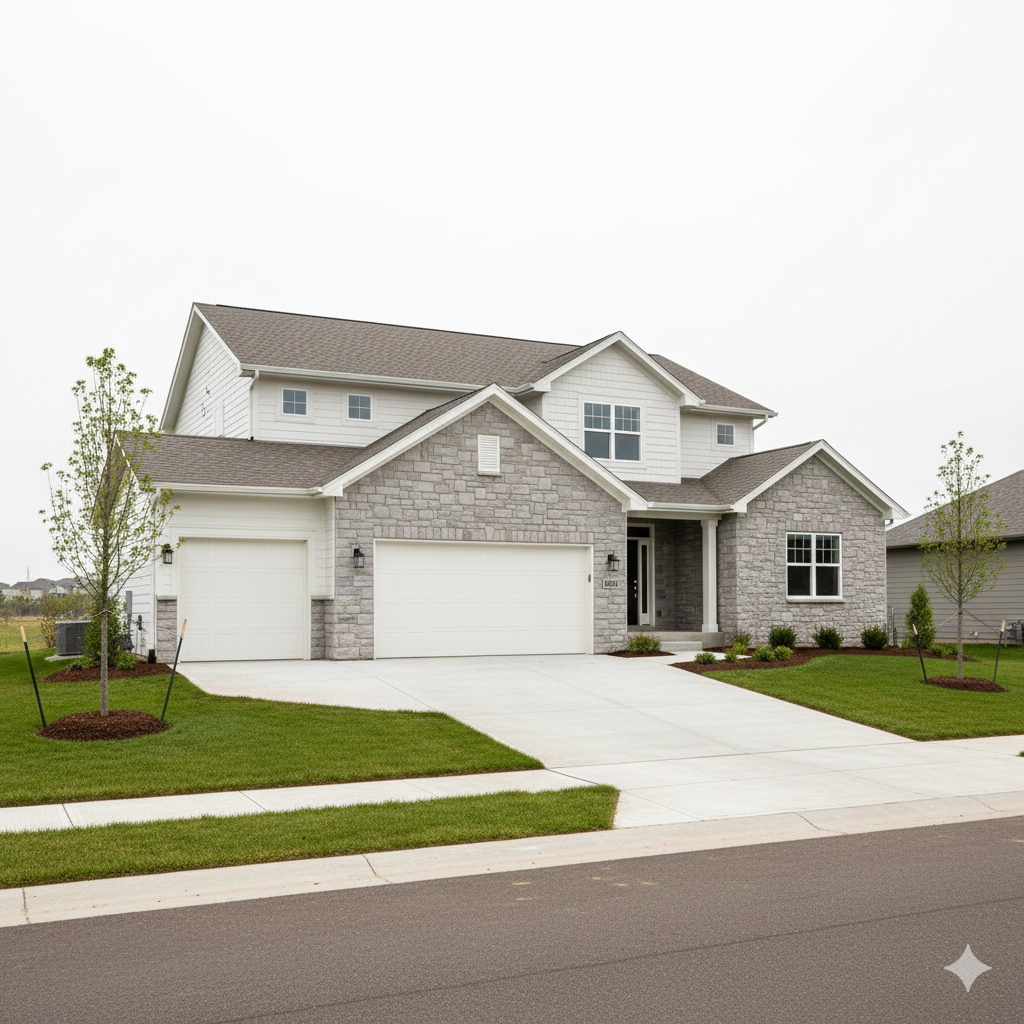
If you're buying a home in a newer Omaha neighborhood — particularly in Elkhorn, Bennington, Gretna, or southwest Omaha — there's a good chance your property is in a Sanitary Improvement District, or SID. And if nobody's told you about it yet, you need to know before you make an offer. SIDs are special taxing districts used to pay off the bonds that financed the infrastructure in newer developments: roads, sewers, water lines, streetlights. The taxes show up as a separate line on your annual property tax bill and can range from a few hundred to over two thousand dollars per year, depending on the district and how much bond debt is outstanding. This guide explains exactly what SIDs are, how to find out if a home you're considering is in one, how much you should expect to pay, and when those taxes will end.
Buying in Elkhorn or Bennington? Don't let a $400/mo SID tax surprise you.
Sanitary and Improvement Districts add $150 to $450 per month to your mortgage payment in Omaha-area new construction—a cost that rarely appears in listing estimates or lender quotes. This guide explains exactly how SIDs work, why payment shock catches buyers off guard, and how to evaluate whether a SID neighborhood fits your financial situation.
What Is a Sanitary and Improvement District?
A Sanitary and Improvement District is a limited-purpose political subdivision that finances roads, sewers, water lines, and utilities in new Nebraska developments. SIDs exist almost exclusively in Nebraska—other states use different mechanisms for infrastructure financing. When developers build new subdivisions outside city limits, they form SIDs to issue bonds that pay for infrastructure upfront, then collect property taxes from homeowners over 20 to 30 years to repay those bonds.
The SID structure shifts infrastructure costs from developers to future homeowners. Without SIDs, developers would need private capital to build roads and utilities, or they would wait years for city annexation and infrastructure extension. Instead, SIDs issue tax-exempt general obligation bonds at 1% to 4% interest rates, constructing everything immediately while spreading costs across homeowners for decades.
For buyers, a SID means a permanent property tax levy on top of county, school, and other taxes. The SID levy typically ranges from 0.25% to 0.90% of assessed value. On a $400,000 home, that translates to $1,000 to $3,600 annually—or $83 to $300 added to your monthly payment beyond what you'd pay in an established neighborhood. For move-up buyers, these added costs often determine whether buying before selling your current home is financially viable or introduces unnecessary risk.
How Much Does a SID Add to Monthly Payments?
SID levies range from 0.25% in older, nearly paid-off districts to 0.90% in new developments with substantial infrastructure costs. The monthly impact depends on home value and levy rate.
| Home Value | SID Levy | Annual SID Tax | Monthly SID Cost |
|---|---|---|---|
| $350,000 | 0.25% | $875 | $73 |
| $400,000 | 0.50% | $2,000 | $167 |
| $400,000 | 0.90% | $3,600 | $300 |
| $500,000 | 0.50% | $2,500 | $208 |
| $500,000 | 0.70% | $3,500 | $292 |
| $554,000 | 0.90% | $4,986 | $415 |
A $400,000 home in a high-levy SID area like Elkhorn's Blue Sage Creek (0.90% SID levy, 2.92% total property tax rate) carries $973 per month in property taxes. The same-priced home in non-SID Omaha (2.22% rate) would cost $740 monthly in taxes—a $233 difference every month, or $83,880 over 30 years.
Why New Construction Buyers Face Payment Shock
Payment shock occurs when buyers discover their actual mortgage payment is $300 to $600 higher than the estimate they received at closing. This happens systematically with new construction in SID areas because Nebraska assesses property value on January 1st each year. If construction is incomplete on that date, only the vacant lot is assessed—typically $40,000 to $60,000 instead of the $400,000 to $600,000 finished home.
Lenders calculate escrow requirements using prior-year tax figures. For a home under construction, that means taxes based on vacant land—perhaps $1,500 annually instead of $11,000 or more. The monthly escrow estimate shows $125 when reality will be $900-plus.
The reassessment arrives 12 to 18 months after purchase. When the county recognizes the completed home's full value, property taxes jump 400% to 700%. The escrow shortage notice demands either a lump-sum payment of $8,000 to $12,000 or a monthly payment increase of $600 to $900 until the shortage is covered.
Buyers who qualified at 36% debt-to-income based on understated taxes suddenly face 42% to 45% DTI—technically unqualified for the loan they already have. Those who stretched their budget for maximum square footage in top school districts find themselves with no financial cushion when the payment jumps.
Douglas County vs. Sarpy County SID Differences
The county line creates a fundamental divide in SID duration and long-term cost. Nebraska law prohibits cities from annexing land outside their county boundaries. Omaha, located in Douglas County, cannot annex Sarpy County SIDs regardless of proximity or development status.
Douglas County SIDs face Omaha annexation once their debt becomes manageable—typically 15 to 25 years after formation. When annexation occurs, the SID dissolves and its levy disappears, replaced by city taxes. Homeowners in Douglas County SIDs may see their SID obligation end before the 30-year bond term.
Sarpy County SIDs cannot be annexed by Omaha. They persist until bonds fully retire or until a Sarpy County city like Gretna, La Vista, or Papillion annexes the area. This means Sarpy County SID obligations typically last the full 25 to 30 year bond term, creating higher lifetime costs.
However, Sarpy County residents avoid certain Omaha-specific expenses: no $70-75 annual wheel tax, lower sales tax (5.5% state rate versus 7.5% Omaha rate), and no city service fees. These savings partially offset the longer SID duration.
Elkhorn, Bennington, and Gretna Comparison
Each suburb offers distinct SID cost profiles, school options, and development characteristics.
Elkhorn (Douglas County)
Elkhorn's Blue Sage Creek (SID #575) carries a 0.90% SID levy—among the highest in the metro—contributing to a 2.92% total property tax rate. A $554,000 home (median new Elkhorn price) pays approximately $415 monthly just for the SID portion. Elkhorn Public Schools consistently rank in Nebraska's top 10%, driving demand despite premium pricing.
Total taxes on that median home reach $16,166 annually ($1,347 monthly), compared to $7,104 annually ($592 monthly) for a $320,000 older Elkhorn home outside SID boundaries. Buyers pay $234,000 more upfront and $755 more monthly for new construction with SID obligations.
Douglas County location means Omaha annexation remains possible in 15 to 25 years, potentially eliminating the SID levy before the full bond term expires.
Bennington (Douglas County)
Bennington offers new construction at $350,000 to $390,000—lower entry points than Elkhorn. Estimated SID levies range from 0.50% to 0.80%, translating to $150 to $260 monthly on typical purchases. Total property tax rates run 2.50% to 2.70%.
Fewer mature trees and still-developing commercial infrastructure distinguish Bennington from established Elkhorn neighborhoods. Like Elkhorn, Douglas County location enables eventual Omaha annexation. Buyers seeking space without $500,000-plus Elkhorn prices find Bennington attractive.
Gretna (Sarpy County)
Gretna SID levies vary from 0.40% to 0.90%, with some neighborhoods reaching 2.85% total property tax rates—the highest in the metro. On a $400,000 home, SID costs run $233 to $350 monthly depending on the specific development.
Sarpy County location means no Omaha annexation. SID obligations persist for the full 25 to 30 year bond term. However, Gretna offers access to both Gretna Public Schools and Millard Public Schools (with lower levy rates than Elkhorn), plus newer school facilities built with developer-donated land.
Families planning 15-plus year ownership who prioritize new schools and construction often accept Gretna's higher lifetime SID costs. Those expecting to relocate within 10 years face difficulty recouping SID premiums at resale.
How Long Do SID Taxes Last?
SID bonds typically carry 20 to 30 year terms, and the levy continues until bonds are fully retired or the district is annexed by a city. The timeline varies significantly by location.
Douglas County SIDs near Omaha's boundaries often see annexation within 15 to 25 years. When Omaha annexes a SID, the district dissolves, its levy ends, and homeowners begin paying Omaha's municipal taxes instead. The net effect on total taxes varies—Omaha's levy may be lower or higher than the SID levy depending on the specific district.
Sarpy County SIDs must wait for Gretna, Papillion, La Vista, or Bellevue to annex them—or they remain independent until bonds retire. Many Sarpy SIDs operate for the full 25 to 30 year duration. Buyers should assume they'll pay SID taxes for their entire ownership period unless they remain in the home beyond the bond retirement date.
No homeowner can prepay their portion of SID debt. The levy applies to all properties in the district equally, calculated as a percentage of assessed value, until the district's total bond obligation is satisfied.
New Construction Benefits vs. SID Costs
SID-financed developments deliver genuinely new infrastructure that older neighborhoods cannot match. Roads designed to current standards offer wider lanes and safer sight lines. Modern stormwater systems reduce flood risk. New sewer and water lines contain no lead or legacy contamination. Underground utilities eliminate aging overhead power lines.
New homes carry builder warranties—typically one year on workmanship, two years on systems (HVAC, plumbing, electrical), and ten years on structural defects. Buyers avoid deferred maintenance: no roof replacement, no furnace failure, no water heater failure, no foundation concerns.
School districts in SID developments often feature new facilities built on developer-donated land. Gretna, Elkhorn, and Millard have constructed elementary and middle schools within recent SID neighborhoods, offering modern technology integration and lower student-to-teacher ratios.
The financial trade-off over 30 years:
| Factor | New SID Home | Established Non-SID Home |
|---|---|---|
| Purchase price | $400,000 | $380,000 |
| Property tax rate | 2.92% | 2.22% |
| 30-year tax cost | $350,400 | $253,080 |
| Years 1-5 maintenance | $5,000 | $25,000 |
| SID-only premium (25 yrs) | $90,000 | $0 |
The new home costs approximately $97,000 more over 30 years in property taxes. Warranty coverage and newer systems save perhaps $20,000 in early maintenance—offsetting only 20% of the tax premium.
When a SID Neighborhood Makes Sense
SID areas work well for buyers with specific financial profiles and priorities. The ideal candidate has household income exceeding $120,000 with stable employment, maintains six-plus months of cash reserves beyond down payment and closing costs, and calculates debt-to-income below 33% after accounting for full property tax reassessment.
Buyers planning 10 to 15 year or longer ownership have time to build equity before selling. Those who prioritize modern amenities, new infrastructure, and top-rated schools over urban convenience benefit from SID developments. Families who value 4-5 bedroom homes with 3-car garages and large yards accept the car-dependent suburban lifestyle these areas require.
Consider a professional couple earning $150,000 annually with no current children but family plans. A $500,000 home in an Elkhorn SID (0.90% levy, 2.92% total rate) creates $4,200 monthly PITI including $1,217 in property taxes—a 33.6% debt-to-income ratio that remains manageable with reserves. They'll own long enough for children to complete elementary school in a top-rated district before any future relocation.
When to Avoid SID Areas
High-risk buyers face payment shock that threatens financial stability. First-time buyers stretching their budget for maximum home size, those already at 40% debt-to-income based on underestimated taxes, households with minimal cash reserves under three months expenses, and workers with income variability from commission, seasonal work, or contract employment should approach SID purchases with extreme caution.
Buyers planning to relocate within five to seven years lack sufficient time to build equity offsetting SID premiums. Those who value walkability, established neighborhoods, or historic character find little appeal in new suburban sprawl.
Consider a first-time buyer couple earning $85,000 annually with 5% down. A $350,000 home in a Bennington SID creates $2,890 monthly PITI based on lender estimates using land-only taxes. The actual payment after reassessment reaches $3,370—a 48.7% debt-to-income ratio that was never sustainable. With only $8,000 remaining after closing, they cannot absorb the $10,000 escrow shortage or the $960 monthly payment increase.
This couple would be better served purchasing a $280,000 established home outside SID boundaries, achieving $2,350 monthly PITI, 39.5% DTI, and no payment shock risk.
How to Research SID Costs Before Buying
Before making an offer on any property in Elkhorn, Bennington, Gretna, or other suburban areas, take these specific steps to understand your true costs.
Identify the SID Number
Ask your agent or the listing agent for the property's SID number. If unavailable, search the county assessor's website by parcel number (found on the MLS listing) and review the tax district codes. Douglas County maintains SID listings at the county clerk's website; Sarpy County offers a SID Lookup tool that maps addresses to district numbers.
Find the Current Levy Rate
The Nebraska Department of Revenue publishes annual tax rate reports by county showing every SID levy. Sarpy County posts current tax rates and levy allocations on its treasurer website. Look for the SID's general and bond levy rates—both contribute to your total tax burden.
Calculate Full Tax Impact
Add the SID levy to school, county, NRD, ESU, and other levies to determine the consolidated tax rate. Multiply by the home's expected assessed value (100% of purchase price in Nebraska) to project annual taxes. Divide by 12 for monthly impact.
Request Realistic Escrow Estimates
Tell your lender you need the Loan Estimate and Closing Disclosure calculated using the property's full assessed value with completed improvements—not land-only figures. If the lender cannot provide this, calculate it yourself and verify the disclosed payment matches reality.
Verify Annexation Timeline
For Douglas County properties, research whether the SID is under consideration for Omaha annexation. City council meeting agendas and planning department records indicate pending annexation votes. Sarpy County properties should be assumed to carry SID obligations for the full bond term.
Frequently Asked Questions
What is the difference between SID assessments and SID taxes?
Special assessments are one-time fees levied against parcels benefiting from specific improvements—typically paid at closing when you purchase a lot. SID property taxes are annual ad valorem levies based on your home's assessed value, collected through your property tax bill indefinitely until the SID dissolves. Both may apply to the same property.
Can I pay off my SID early?
No. SID debt is a district-wide obligation repaid through property taxes collected from all parcels within the district. Individual homeowners cannot prepay their portion. The levy continues until total bond obligations are satisfied or the district is annexed.
Will my SID taxes go down over time?
SID levies may decrease slightly as bonds are retired and new development adds assessed value to spread costs across more properties. However, school levies and county rates can increase, potentially offsetting any SID reduction. Property value appreciation also increases your total tax bill even if rates decline.
Why didn't my realtor or lender disclose SID costs accurately?
Nebraska law has required SID acknowledgment forms since 2015, but enforcement is inconsistent. Many realtors and lenders lack fluency in SID mechanics. Lenders typically use prior-year tax figures for escrow calculations—appropriate for existing homes but systematically inaccurate for new construction. Buyers must research independently.
Are SIDs the same as HOAs?
No. SIDs are government taxing entities with authority to levy property taxes. HOAs are private associations collecting dues for amenities and rule enforcement. A property can have both SID taxes and HOA dues—and many new developments do. SID payments appear on your property tax bill; HOA dues are billed separately.
Are SID taxes deductible on federal returns?
Yes. SID property taxes qualify for the state and local tax (SALT) deduction, currently capped at $10,000 annually for most filers. This means high-SID homeowners may hit the SALT cap faster, reducing the effective tax benefit of the deduction.
Do SIDs affect resale value?
SIDs impact buyer qualification. Higher monthly payments reduce the pool of qualified buyers. However, desirable school districts and newer infrastructure can offset this effect. In strong markets, SID neighborhoods appreciate alongside or ahead of non-SID areas. In weak markets, the payment burden may suppress values more than comparable non-SID properties.
Where do I find exact SID information for a specific property?
Start with the county assessor website to identify the parcel's tax district codes. Cross-reference with Nebraska Department of Revenue tax rate publications showing all SID levies by county. For Douglas County, the county clerk lists active SIDs; for Sarpy County, use the online SID Lookup tool. Your title company can also provide SID documentation during the purchase process.
If you're evaluating a move-up purchase in Elkhorn, Bennington, Gretna, or surrounding areas, I can help you understand the complete cost picture before you commit. My approach focuses on protecting buyers from payment shock and ensuring the neighborhood you choose aligns with your financial reality—not just your wish list. Schedule a consultation to review specific properties and run accurate payment projections.
About Linda Moy
Move-Up & Sell-to-Buy Real Estate Specialist | Nebraska Realty
Linda Moy specializes in helping homeowners sell their current home and move up with clarity, confidence, and control. Her approach focuses on timing strategy, equity optimization, and protecting clients from common sell-to-buy risks like double payments, missed opportunities, or rushed decisions.
A consistent top producer, Linda is known for her calm leadership, detailed planning, and ability to align selling and buying timelines smoothly. Her work has earned multiple honors, including Rookie of the Year, Entrepreneur of the Year (Women's Council of Realtors®), and the Nebraska Realty Renne Lampman Award for outstanding service.
Originally from McCook, Nebraska, Linda has called Omaha home since 1993 and remains deeply involved in the community, including board service with the Divine Mercy Food Pantry.
Thinking about moving up?
Categories
Recent Posts



SCHEDULE YOUR MOVE-UP STRATEGY SESSION
Move WITHOUT the stress, double moves, or leaving equity on the table.
Karen Keller

Kyle Andersen
Chloe King
Connie Karnes
Brenna Allen
Kayla Mack
Vicki Smith
Tyler Steel
Dawson Spurgis